Rafael Fernández de Noreña opened one of Spain’s first CBD shops in 2018. Eight years later, his company is closed and his case has become a precedent that prosecutors are already citing against other flower retailers. What Supreme Court ruling 301/2026 does and does not say, and how the industry organized to respond.
“The company is closed. As a person, I’d have to defend myself, but I don’t have the financial ability. I can’t do it.”
On April 23, 2026, Spain’s Supreme Court reinstated Rafael Fernández de Noreña’s conviction. Rafa, as he is known in the industry, was in Prague when his lawyer notified him. He had found another job in the cannabis sector and had moved there for professional reasons. His company had already closed, but the legal proceedings were still ongoing.
The reinstated sentence included one year and two months in prison and an €8,000 fine. Rafa did not expect to go to prison: “I know I won’t go to prison because I don’t have a criminal record,” he says. The ruling notes that he has no prior convictions, although the suspension of the sentence is not automatic in Spain and, as of the publication of this article, we could not confirm whether there is a judicial decision granting it. His specific concern was elsewhere: the €8,000 fine and where he would find the money to continue a legal defense that, until then, had been funded by the company.
Rafa was the administrator of Sensitive CBD, a Barcelona-based company that sold CBD flowers and other cannabidiol products. Speaking with El Planteo for this article, he explains how he went from opening a pioneering shop to relying on help from other entrepreneurs to continue defending his business activities in court.
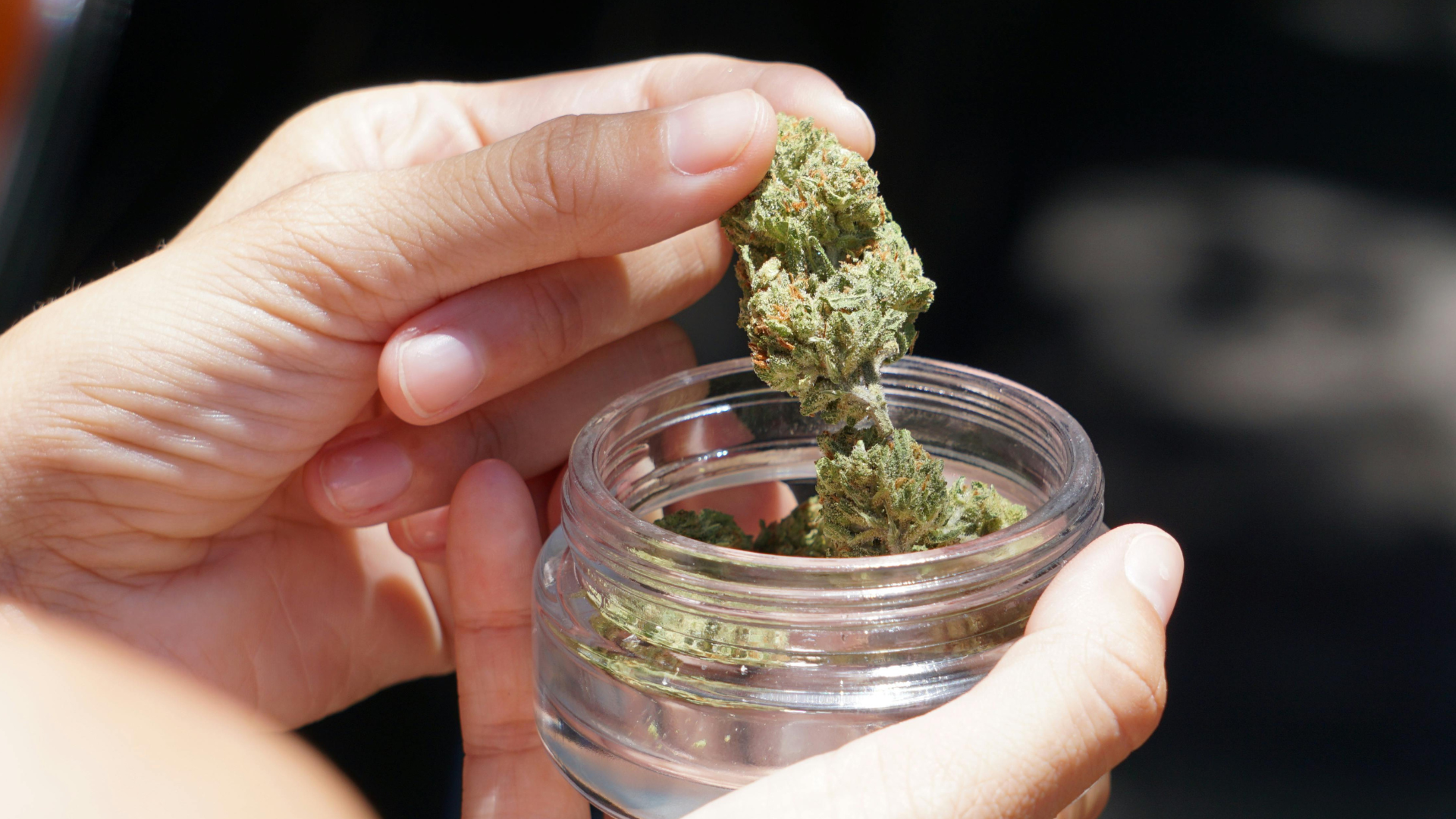
In 2018, when Rafa launched Sensitive, selling CBD flowers was still entirely new in Spain. CBD, or cannabidiol, is one of the compounds found in cannabis and does not produce the characteristic psychoactive effects of THC. CBD flowers are buds from varieties rich in cannabidiol and with low concentrations of THC. That last part is key to understanding the Sensitive case because the presence of THC in these flowers, even in small amounts, is now at the center of the legal debate over their sale in Spain.
“We were the first ones to take CBD flowers, put them in a glass jar, put them in a shop window, and wait for the police to show up,” Rafa recalls. They were convinced they could sell them. They also knew that, sooner or later, they would have to defend that position before authorities.
Eventually, that day came. The case that would end up before the Supreme Court began on December 15, 2020, with the interception of two Sensitive shipments destined for France. On January 31, 2023, Barcelona Criminal Court No. 18 convicted Rafa and sentenced him to one year and two months in prison and an €8,000 fine. His defense appealed. On May 2 of that same year, the Sixth Section of the Barcelona Provincial Court acquitted him.
However, prosecutors appealed that acquittal before the Supreme Court. Nearly three years later, on April 23, 2026, the court ruled in their favor: it overturned the acquittal and reinstated the original conviction. This is ruling 301/2026, commonly cited in Spain as STS 301/2026.
By then, Sensitive had already ceased operations and Rafa was trying to start over. His case prompted other CBD entrepreneurs in Spain to step forward to support him and help sustain his defense. That support combined recognition of his role in the early days of the industry with a shared concern that the legal reasoning applied in his conviction could also affect their own businesses.
The Sensitive Case: How a CBD Flower Shipment to France Reached Spain’s Supreme Court
The packages intercepted in Barcelona contained very different products, from cosmetics, infusions, cigarettes and cigars to buds and bags of plant material. In some of the samples, laboratory analyses detected THC concentrations between 0.3% and 0.7%. The ruling treated the products in the shipment differently. It considered trade in cannabis plant preparations to be illegal, but excluded the analyzed infusions and cosmetics from that classification.
Rafa describes the shipment as a routine operation with a French distributor that supplied other points of sale. There were invoices, identified suppliers, and a known customer. His argument is that they operated openly: “We are registered companies, we put our name and our face out there. We are not hiding at all.”
For those who had built Spain’s CBD market, selling publicly, documenting purchases, and having laboratory analyses were ways of showing that they were engaging in legitimate commercial activity. But the case was not resolved based on the transparency of the operation. The question was whether those plant-based products, containing CBD and low concentrations of THC, should be treated as a drug under criminal law.
The Provincial Court that acquitted Rafa in 2023 found that sufficient psychoactivity had not been proven to justify a conviction. Among the elements it considered were expert assessments and the psychoactivity index, a calculation that relates the concentrations of THC, CBD and CBN, another cannabis compound. That index is used to differentiate plant profiles and played an important role in the acquittal.
Prosecutors challenged that interpretation through a cassation appeal, asking the Supreme Court to review how the law had been applied. The court started from the same established facts but reached a different conclusion. It determined that the sale of the products under examination fell under Article 368 of Spain’s Criminal Code, which punishes trafficking and other conduct that facilitates the illegal consumption of drugs by third parties.
For the Supreme Court, several elements mattered in combination: there was cannabis plant material containing THC, it had been prepared for commercial sale and consumption, and the total amount of THC far exceeded the 10 milligrams that Spanish case law uses as a reference point for a minimum psychoactive dose. The court also rejected the idea that the psychoactivity index used by the Provincial Court could, by itself, determine whether a crime existed.
The ruling distinguishes CBD as a substance from plant preparations that also contain THC. The conviction refers to the sale of the latter under the circumstances examined in the Sensitive case. This criterion worries those who sell flowers and similar products in Spain, who must now review whether the controls and arguments they had been relying on will be enough to defend themselves against a potential criminal accusation.
Selling CBD Flower in Spain After the Ruling: What Changes for Shops
Albert Mayol, founder and CEO of CBD Side, a Barcelona-based company that sells CBD flowers and other CBD products in stores and online, acknowledges that those who entered this business were aware of the challenges involved. Speaking with El Planteo for this article, he explains it through a clear and simple comparison: “It’s not the same as selling shoes.”
His company, he explains, makes purchases within the European Union, with invoices and source laboratory reports. They work with legal advisors and review the labeling and characteristics of all products. Even so, those precautions do not eliminate the risk that a court may consider the activity criminal.
A CBD Side blog article addresses the scope of the ruling in detail. In an analysis published after the decision, the company points out that STS 301/2026 “is not a law, nor a regulation, nor a government decision concerning the CBD market.” It only resolves a specific criminal case.
Its influence, however, could extend far beyond that individual proceeding. A prosecutor can cite the Supreme Court’s reasoning to support an accusation in another case, and a judge can use it when making a decision. The industry had found support for its growth in European decisions regarding CBD. Now, companies fear that the reasoning applied to Sensitive could slow that development and expose them to new convictions in Spain.
One of the most widespread misunderstandings concerns THC percentages. For years, 0.2% and later 0.3% were widely cited as a quick answer to the question of when a CBD flower is legal. But those values come from rules regarding the cultivation of hemp, and they do not, by themselves, resolve the conditions for selling a finished product.
The current framework of the European Union’s Common Agricultural Policy establishes a maximum of 0.3% THC for access to certain cultivation subsidies and requires certified seeds from approved varieties. Meeting that agricultural requirement does not amount to having a general authorization to commercialize any product containing that concentration.
Albert explicitly acknowledges that distinction. He says the industry uses the percentage as a widely used reference due to the lack of specific rules, although it is not an automatic boundary between what is permitted and what isn’t. His commitment to the business exists alongside that uncertainty.
“In other words, it’s like weathering a storm because you know there’s land on the other side, and you have to get through it,” he says. He uses this imagery to describe the situation, trusting that the legal landscape will eventually clarify the conditions for doing business. Until then, maintaining that commitment means continuing to operate while facing the risk of criminal proceedings—and the associated costs.
CBD Flower: The Controversy Over Aggregating Total THC in a Shipment
To understand one of the main objections to the ruling, it’s useful to consider a simple distinction: the THC percentage of a single flower and the total THC content of a shipment are different figures.
One gram of plant material with 0.3% THC contains approximately 3 milligrams of THC. One hundred grams of that same material would contain 300 milligrams. The concentration didn’t change; what increased was the quantity of goods. This example illustrates why a commercial shipment can exceed the 10-milligram threshold, even when each individual gram contains very little THC.
Marta de Luxán Marco—a lawyer at De Luxán & Nieto Abogadas, a firm specializing in CBD-sector cases—was consulted by El Planteo regarding the ruling’s reasoning. She believes that applying the standard in this way leaves companies selling flowers highly vulnerable to criminal charges.
Rafa questions the calculation based on his own experience shipping products to supply other businesses: “You can’t just make that calculation lightly, because there isn’t a single consumer who is going to consume all those products at once. It’s impossible.”
The Supreme Court analyzes the operation from a different perspective. It evaluates a quantity of cannabis intended for circulation among third parties. Consequently, it considers the total THC content alongside the products’ composition, presentation, and commercial destination. It is not describing the amount a person consumed on a specific occasion. Critics of the ruling object to the court comparing the 10-milligram figure with the total THC content of a shipment, even when the goods are intended for distribution among many consumers. They argue that this calculation alone does not demonstrate what effect the quantity actually consumed by an individual may have.
Marta also questions the Supreme Court’s decision to downplay the psychoactivity index assessed by the lower court. She maintains that the ratio of the plant’s various compounds should carry more weight in distinguishing between products with different profiles. The court, however, holds that this index does not, in itself, determine the criminal-law response.
In Marta’s view, the ruling “does not create case law, yet it carries enormous weight.” She draws a distinction between an isolated judgment and a line of criteria established through repeated rulings. However, she notes that this formal distinction may matter little in practice: “Most judges and magistrates are not going to go against what the Supreme Court has already said.”
Isidre Carballido Enrich, founder of Cannactiva—another Spanish company selling CBD products—was also consulted by El Planteo for this article. According to what lawyers in the sector have told him, some prosecutors are already citing ruling STS 301/2026 to bring charges against hemp flower vendors.
“I cannot give you consolidated figures yet; industry associations are currently gathering data on the cases,” he clarifies. He also emphasizes that “a Supreme Court ruling neither closes the debate nor convicts anyone in advance.”
These accounts describe a legal standard that is beginning to be applied in other proceedings, though its full scope cannot yet be measured. Each new case will require an examination of the specific products sold, their composition, and the evidence and arguments presented by both the prosecution and the defense.
Why CBD Companies Are Looking to the European Union
Much of Albert, Marta, and Isidre’s confidence rests on European Union law. Their argument is based on a concrete situation: Spanish companies purchase products legally manufactured in other Member States and take the view that common market rules should also protect the marketing of those products in Spain.
The key precedent is the Kanavape case. On November 19, 2020, the Court of Justice of the European Union ruled on a request for a preliminary ruling regarding CBD legally produced in the Czech Republic—extracted from the whole plant—and marketed in France. It concluded that the CBD in question should not be classified as a narcotic and that its sale was protected by the rules on the free movement of goods.
That protection allows for restrictions based on public health grounds, but the State must justify the risk and demonstrate that the measure is appropriate and proportionate. In other words, it cannot impose a ban that is more restrictive than necessary based solely on hypothetical risks.
The Spanish Supreme Court took the Kanavape case into account. However, it held that the ruling did not resolve the Sensitive case, which concerned the marketing for consumption of cannabis plant matter containing THC. Those interviewed question this distinction, arguing that European principles should also apply when analyzing hemp flowers legally produced in other EU countries.
France provides another precedent, specifically regarding flowers and leaves. On December 29, 2022, the Conseil d’État—France’s supreme administrative court—overturned a general ban on marketing such products derived from authorized varieties with up to 0.3% THC. It found that no health risk justifying an absolute ban had been proven, and it attached importance to the quantities actually consumed and the method of consumption.
While that decision does not compel Spanish judges to rule in the same way, it demonstrates that the debate regarding flowers can lead to a different outcome—even when framed in terms of public health protection.
For the debate to reach the Court of Justice of the European Union via a request for a preliminary ruling, a Spanish court must submit a query regarding the interpretation of EU law. The defense may request that the court do so. The Court of Justice answers the question, and the Spanish judge subsequently resolves the case by applying the Court’s interpretation.
A different tool is the recurso de amparo (constitutional appeal) before the Spanish Constitutional Court. It is used to challenge alleged violations of fundamental rights, is subject to strict admissibility requirements, and filing it does not automatically stay the enforcement of the judgment.
The companies and lawyers consulted view these avenues as an opportunity to revisit the Supreme Court’s stance. This expectation helps explain why they decided to organize and fund further legal action. The outcome will depend on the arguments presented and the courts’ decisions.
The CBD Pioneer in Spain Who Found Support From Competitors to Keep Fighting
When looking back at the cost of keeping Sensitive afloat, Rafa estimates that, over a period of about eight years, the company lost around €200,000 due to seized merchandise, replacement orders sent to retain customers, legal fees, and other legal proceedings.
This figure is his own estimate and adds the costs incurred during various incidents prior to the April 2026 ruling. By the time the Supreme Court issued its decision, the business had already ceased operations.
Subsequent events changed his mind about abandoning the legal battle. Other business owners began calling to offer legal representation and financial support. More industry players and professionals soon joined in, including Héctor Brotons, a lawyer specializing in cannabis-related cases. According to Rafa, Brotons was one of the first to call and was part of the group that organized the response and the fundraising effort.
They organized a fundraising drive among companies and assembled a team experienced in constitutional litigation. Part of the funds went toward paying the lawyers from Brotons’ team who would handle the case. Support continued through meetings to track developments. Many of the contributors were themselves selling the products whose legal status was at the heart of the Sensitive case.
The support Rafa received was also linked to his history in the sector. During Sensitive’s early years, other entrepreneurs would visit the shop to learn about the business. He and his team shared what they had learned, even knowing they were helping future competitors. “We’ve always created our own competition,” he recalls with pride.
Years later, support from other business owners enabled him to resume a legal defense he could no longer afford. Rafa remembers the shift in his mindset after those calls: “Right, let’s move forward. I’m going to face it head-on.”
The sector’s response is also channeled through the Spanish Industrial Hemp Association (AECANI), which brings together industry operators and liaises with government authorities. The organization commissioned a report prepared by a university professor specializing in European Union law and its constitutional safeguards.
The document, available to members, seeks to provide lawyers with the tools to incorporate European arguments into hemp-related proceedings. Thus, the work prepared for one defense can also benefit other companies facing similar issues.
Speaking for CBD Side, Albert describes this desire for collective action: “We have joined forces to form a united front—a unified response to this injustice.” For Rafa, this coordination had an immediate impact, enabling him to pursue a legal case that, without assistance, he would not have had the resources to continue defending.
CBD Companies in Spain Want to Grow, But Still Lack the Certainty Needed to Invest
CBD Side and Cannactiva are continuing their operations. According to Albert, CBD Side is operating normally and with legal counsel in place. When asked what Cannactiva changed following the ruling, Isidre replies: “Nothing in our product catalog.”
A criminal case can drag on for years. While it is being resolved, a shop must still cover rent, salaries, taxes, and supplier costs, in addition to legal defense expenses. The possibility of making it all the way to a favorable verdict also depends on being able to sustain that entire process.
Legal uncertainty therefore affects very specific decisions: how much to invest, what risks to take, and how long operations can continue without a clear answer. It can also influence which companies retain their market position and which ones withdraw before the matter is settled.
In this context, Albert remains committed: “Of course, I still believe in the sector. I think it has a great future, but I can’t be naive about it either.” He believes Spain has a significant opportunity in the cultivation of hemp and non-psychoactive cannabis, though he warns that “it’s obvious that, as things stand, a cloud of legal uncertainty is limiting the sector’s growth in Spain.”
AECANI is calling for operator registries and clear conditions for marketing products. The association argues that these tools would improve traceability—tracking the origin and journey of the goods—and better distinguish between those who meet specific standards and those who exploit the lack of oversight. One of their concerns is that synthetic cannabinoids with intoxicating effects might also be sold in stores operating under the CBD label.
Although he has faith in the judicial process, Isidre would prefer a political solution: “We would rather it come from political will, because regulation via court ruling is never ideal; it always leaves gaps exposed.”
CBD companies in Spain are demanding clarity on what they can sell, how their products must be tested, and which regulatory controls they must meet. These are fundamental answers needed before opening a shop or purchasing a batch of flower.
With the support of other business owners, Rafa was able to continue a defense effort that now extends beyond his own company, Sensitive. While the sector looks to Europe to clarify the situation, a more urgent question remains: how many of these businesses—which create jobs and pay taxes—will be able to keep operating until there is clarity on what they can legally sell?
Credit: Source link