Colorado was one of the first states to legalize adult-use cannabis, and more than a decade later it offers an early look at what happens after a market matures: falling wholesale prices, ongoing consolidation, and many operators that have been acquired, changed direction, or closed.
Jonny Radding is still here.
A founding partner of Durango Organics, Radding has spent close to fifteen years in Colorado cannabis—first in the medical market, then through the launch and grind of adult-use sales. The company began like many others: small garage grows, homemade nutrient programs, and a learning process based largely on trial and error. Today it runs greenhouse cultivation, medical licenses, and multiple retail locations across the state’s southwest corner.
“We were bootstrapping everything,” Radding said. “Power upgrades, perpetual-grow scheduling, nutrient recipes—we were figuring it out as we went.”
The five lessons that kept him in business, he says, had less to do with growing cannabis than with building an operation that could withstand market volatility.
1: Legacy Growers Still Have a Place, If They Adapt
The prevailing wisdom for years held that small and legacy operators were destined to get steamrolled by better-capitalized competitors. Radding rejects the premise.
“The idea that legacy growers can’t compete anymore—I don’t buy it,” he said.
What’s changed isn’t whether craft matters, but what has to accompany it. Passion for the plant still counts, he argues, but only when it’s paired with operational discipline: compliance, standard operating procedures, and repeatable systems that don’t depend on a single grower’s instinct. For Durango Organics, that meant moving cultivation into greenhouse environments, tightening production schedules, and formalizing practices that the team once ran on feel.
“What makes legacy growers special is still important,” Radding said. “That relationship with the plant still matters. But you have to match it with the discipline and adaptability the industry demands today.”
Even established techniques continue to change. High Times’ coverage of the shrinking role of the vegetative phase shows how quickly accepted practices can shift. The operators who last tend to be the ones who keep learning.
2: Scale Infrastructure, Not Just Canopy
A common mistake Radding sees is operators expanding production before the rest of the business can carry it.
“It’s tempting to go big the moment things start working,” he said. “But growing more cannabis isn’t the same thing as growing a cannabis business.”
Durango Organics hit its own stretches where growth threatened to outrun the infrastructure underneath it. Rather than max out square footage, the company added canopy in stages and built the support systems in parallel—expanding drying capacity, upgrading power, and investing in people before it added another room. Perpetual-harvest systems, Radding warns, are especially vulnerable when operators scale too aggressively.
“If you’re not staggered appropriately, you can end up drowning in harvests,” he said. “You burn out your team or miss product windows.”
Producing more biomass isn’t the goal. The goal is a workflow that stays manageable and profitable as volume increases—a distinction that matters more as wholesale prices continue to decline.

3: Consistency Is the Whole Game
If there’s one idea Radding returns to, it’s consistency—and he’s found that the way to achieve it is by simplifying.
Like many growers who entered the industry during legalization’s early years, he built feeding programs from forum recommendations, peer advice, and a growing collection of products.
“There were years where we were running these crazy concoctions with a million different things in them,” he said.
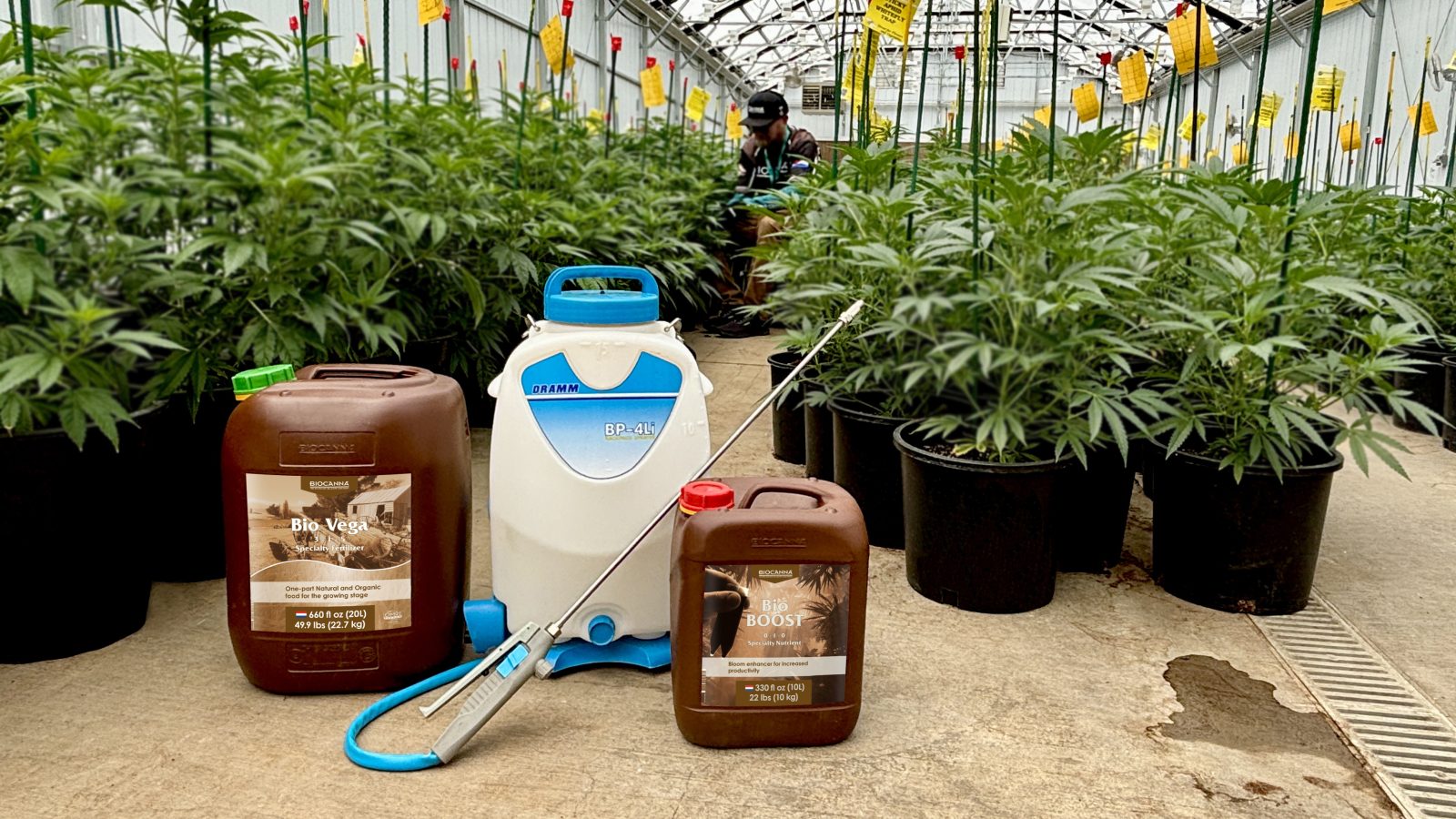
The problem wasn’t the complexity so much as what it hid. Every variable was another thing that could go wrong, and another thing to rule out when it did. “We were always troubleshooting something. Wondering whether the product was the issue or if we’d just mismeasured.” As the company matured, it standardized its inputs and pared the program down, building the feeding schedule around CANNA Nutrients, whose lines are designed for a specific substrate rather than a one-size-fits-all bottle. Matching the feed to the growing medium—coco, soil, or a recirculating system—reduced the number of variables rather than adding to them.
“You don’t need a shelf full of additives to grow exceptional flower,” Radding said. “You need the right tools and the discipline to use them consistently.”

For Durango Organics, CANNA’s OMRI-listed organic nutrient line became part of that discipline—a fixed input the crew could trust while they troubleshot everything else.
That clean, repeatable starting material also benefits later stages of production. At Durango Organics, trim and biomass aren’t a waste stream—they’re a second revenue line. “Our trim becomes oil that we can wholesale,” Radding said. As solventless products, hash, and premium extracts continue to take market share, more cultivators are making grow-room decisions with processing outcomes in mind, such as wash-focused cultivation and extraction-driven genetics.
“The cleaner and more consistent your starting material is,” he said, “the easier everything becomes downstream.”
4: Differentiate or Drown in the Price War
Few factors have shaped the modern market more than downward pressure on pricing. As supply swells and competition tightens, growers increasingly compete on two numbers: THC percentage and price per pound. Radding thinks that’s a losing position for anyone trying to build something durable.
“When the market floods with low-quality, low-priced flower, our edge isn’t volume,” he said. “It’s distinction.”
For Durango Organics, that distinction comes from an organic growing philosophy paired with control of the product from cultivation through retail—enough of a chain that the company can tell a fuller story about how the flower was made. Radding is clear-eyed about the ceiling on the story, though.
“Most consumers are driven by potency first,” he said. “So we meet the market where it’s at.”
So the company supplements its own flower with select wholesale products for THC-focused consumers, then uses its retail locations to highlight what it grows in-house—reaching multiple customer segments while maintaining a distinct identity. In a competitive market, strong business relationships remain essential.
“This industry is still pretty insular,” Radding said. “If you’re not careful about being a good B2B partner, you can end up on a lonely road.”
5: Culture Is the One Edge You Can’t Copy
Technology, compliance, and market conditions have all changed over the past decade. People, Radding says, have remained the constant. At his company, retention and workplace culture get treated as strategy rather than an afterthought—and the same logic runs all the way out to the retail counter.
“At the end of the day, our success comes from building a team that loves cannabis as much as we do,” he said. “We try to give everyone who walks into our stores the best five or ten minutes of their day.”
It’s an advantage competitors can’t easily replicate, and, he admits, one of the most difficult to scale. After nearly fifteen years, it remains a priority he continues to invest in.
“Evolving doesn’t mean selling out,” Radding said. “You can stay true to your roots and still build a business that lasts.”
Great flower doesn’t happen by accident. If you’re ready to level up your cultivation, connect with the team at CANNA and see how the right nutrient program can help your operation thrive.
Photos courtesy of CANNA
Sponsored Content Disclosure: CANNA USA sponsored this article as part of a paid partnership with High Times. The story draws on Jonny Radding’s experience operating Durango Organics and includes CANNA products as part of the cultivation practices he describes. This is not an independent product review or cultivation recommendation. Statements about CANNA products, nutrient programs, and their role in Durango Organics’ operation reflect the experiences and claims presented by the participants unless otherwise sourced, and have not been independently tested or verified by High Times.
Credit: Source link