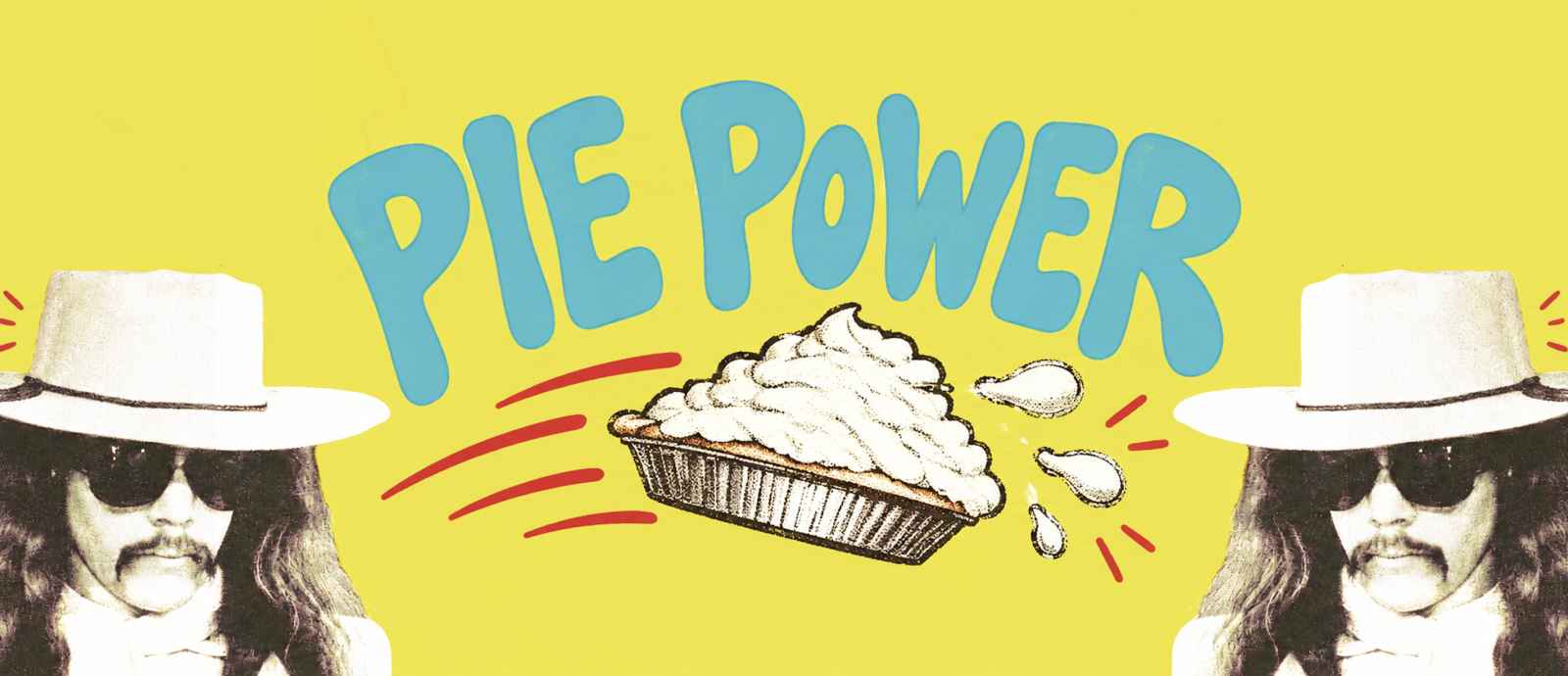
In 1970, Tom Forçade put a pie in a federal commissioner’s face. When the government was finally pressed to explain why it had denied him a White House press pass, it pointed him back to the newspaper story about it. The lawsuit he brought with Robert Sherrill led to the precedent a judge invoked this week to restore access for CNN, MS NOW and Politico.
This week a federal judge ordered the White House to give CNN, MS NOW and Politico their press credentials back. The judge was Timothy Kelly, appointed by Donald Trump in his first term. It is a temporary restraining order, not a final ruling, and the case continues. The reasoning was narrow and procedural, the kind of ruling that doesn’t make a good headline. But the legal path to the precedent it rests on runs through a lawsuit brought by the man who founded this magazine, after the government shut him out of the White House and never told him why.
At the district court level, that case was called Forcade v. Knight.
Pie power
On May 13, 1970, the U.S. Commission on Obscenity and Pornography held the last day of its public hearings in a Senate office building in Washington. Thomas King Forçade was there as project coordinator of the Underground Press Syndicate, the consortium that linked hundreds of counterculture papers across the country. He testified first, reading a prepared statement of about a thousand words that called the panel a “Keystone Kommittee engaged in a blatant McCarthyesque witch hunt.”
Then he got out of his chair and pushed a pie into the face of Otto N. Larsen, a sociology professor at the University of Washington and a member of the commission. The Associated Press photographer Henry Griffin caught it. Forçade handed out flyers reading “pie power.” The New York Times ran the story the next morning, on page 8, and described the pie as cheese. The AP caption called it cottage cheese.
No charges were filed. Forçade went back to work, and in September 1971 the Standing Committee of Correspondents voted 3 to 2 to admit him to the Senate press galleries, the first credential of its kind for an underground paper.
The White House was a different matter.
‘Certain information’
In November 1971, the Secret Service denied Forçade’s application for a White House press pass. Nobody would say why. The agent handling his file didn’t return calls, and a spokesman would only say the decision rested on certain information the government had.
Robert Sherrill, the Washington correspondent for The Nation, had been through the same thing five years earlier. He had House and Senate credentials and had been turned down for a White House pass in 1966, also for reasons of security, also without explanation. The two of them sued.
When the American Civil Liberties Union filed a Freedom of Information Act request for the records behind the denials, the government refused. On appeal, Assistant Treasury Secretary Eugene Rossides wrote back in June 1972 with the closest thing to an answer either man ever got. On Sherrill, he noted an arrest and fine for assault in Florida. On Forçade, he wrote that he should “refer him to the New York Times, May 14, 1970.”
That was the closest thing the government gave Forçade to an explanation: a newspaper clipping about the pie, handed back to him as a citation. The court would later note that the actual reasons for the denial were nowhere specifically set forth, and that the file the government had built on him was a thick one.
Four months later, Rossides declined to reverse the denials, saying only that they related to the security of the president and his family. The government conceded in court that both men met every requirement for accreditation except a security clearance nobody would explain.
The case that carried his name
By the time the district court ruled in 1976, Forçade had spent two years running a magazine he founded in 1974 to do for marijuana what Playboy had done for sex. The case, Forcade v. Knight, 416 F. Supp. 1025, did not order the Secret Service to hand over the passes. It ordered something more durable. The Service had to write narrow and specific standards for judging applications, and it had to follow a process: tell the applicant what the evidence is, give him a chance to answer it, put the decision in writing.
The government appealed. Forçade dropped out. On April 1, 1977, the appeal as to him was dismissed, and Sherrill carried it alone to the D.C. Circuit, which affirmed the procedural core of the ruling later that year. The decision is known today as Sherrill v. Knight, 569 F.2d 124.
Forçade died in November 1978, at 33. He never got the pass.

Fifty years later
Trump announced the ban on September 18, in a social media post, effective immediately. CNN, MS NOW and Politico lost their hard passes with no notice and no stated standard. The five networks that rotate through the White House television pool, Fox News included, suspended the pool in response. The three outlets sued on First and Fifth Amendment grounds.
At the hearing this week, Kelly opened by noting the irony of the assignment. He was the judge who, in 2018, temporarily restored Jim Acosta’s White House pass after Trump revoked it, and he said he had been as surprised as anyone to discover, digging into the law back then, that the D.C. Circuit had found a due process interest in a press credential. That discovery was Sherrill.
Justice Department lawyers argued this week that Sherrill and a later case brought by the reporter Brian Karem were wrongly decided. Kelly’s answer, in the order he issued, was that maybe they were, “but this Court is bound by D.C. Circuit precedent, full stop.”
He granted the restraining order on the narrowest available ground, the Fifth Amendment claim, and left the bigger First Amendment question about viewpoint discrimination for another day. This is close to what happened in 1976. The court didn’t tell the government who it had to let in. It told the government it had to have rules, publish them, and apply them to everyone.
That principle has now survived Nixon, the first Trump administration and the second. And High Times’ place in the chain that produced it begins with a man who, when the government was finally pressed to explain why he had been shut out of the White House, was pointed back to a newspaper story about a pie.
MS NOW’s Jen Psaki traced the same history on “The Briefing” this week. The segment on Forçade starts at 1:29.
For more on the man who started High Times, read Tom Forçade Wanted Legitimacy: Inside the Secretive, Paranoid Mind That Created High Times.
Credit: Source link